2016 – 2022

Ph.D. in Computer Science
Oregon State University · Oregon, USA
Thesis: Investigating Latent State and Uncertainty Representations in Reinforcement Learning
about
Lead Research Scientist @ Salesforce
Palo Alto, California
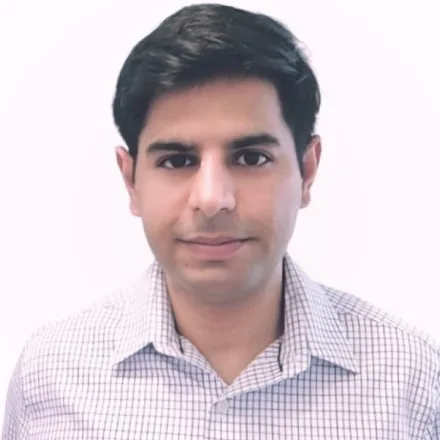
I am a researcher who has been generally curious to understand human intelligence and building general intelligent systems. In early days, this formulated as understanding reinforcement learning agents — how to represent the world, the role of memory, and how to do decision-time planning to improve an agent's behavior in complex environments. This further evolved into learning from offline data, multi-agent setups, and a systematic study of goal-conditioned RL. More recently, I have delved into post-training of large agentic models and continue to focus on improving RL techniques and reasoning abilities of the language models.
experience

Research on post-training of agentic large language models.

LLM post-training for agentic models (Laguna M.1 / XS.2) with focus on agentic mathematical reasoning and instruction following.

LLM post-training for code generation — RL with code-execution/rule-based feedback, built internal evaluation benchmarks, and multi-LLM routing.

Goal-conditioned reinforcement learning with hierarchical abstractions for representation learning, planning, and large transformer models, under John Langford.
Safe model-based reinforcement learning for compute allocation in system control, under Siddhartha Sen.

Model-based reinforcement learning for control with decision-time planning and look-ahead search (MCTS, Rollout) and self-play, under Somdeb Majumdar.

Collaborative multi-agent reinforcement learning for inventory management; built ma-gym, an open-source collection of multi-agent environments, under Davood Hajinezhad and Afshin Oroojlooy.

Full-stack web development: Network Pricing Engine, Customer Enquiry Portal, and Network Packet Management.
Developed web-crawlers and agents for gathering web data and automating general web tasks.
education
Oregon State University · Oregon, USA
Thesis: Investigating Latent State and Uncertainty Representations in Reinforcement Learning

University of Mumbai · Maharashtra, India
research
conference ACL
LLMs excel at code tasks but struggle in realistic repositories where project-specific APIs and cross-file dependencies matter, and tight inference-time latency budgets limit retrieval quality. SpecAgent is an agent that improves both latency and code-generation quality by proactively exploring repository files during indexing and constructing speculative context that anticipates future edits. Computing context asynchronously at indexing time masks latency, while its speculative nature improves generation. We further identify future-context leakage in existing benchmarks and build a synthetic, leakage-free benchmark, on which SpecAgent achieves absolute gains of 9-11% (48-58% relative) over the strongest baselines while significantly reducing inference latency.
conference ICML
Goal-conditioned planning benefits from learned low-dimensional representations of rich observations. We learn a representation that associates reachable states together for effective planning and goal-conditioned policy learning. PcLast couples a temporal contrastive objective with multi-step inverse dynamics to recover representations that capture the geometry of the environment despite exogenous noise, improving sample efficiency and planning quality.
workshop DRL Workshop, ICLR
Decision makers often wish to use offline historical data to compare sequential-decision-making policies. We construct benchmarks (OPCC) for offline policy comparison with confidence, formalizing the problem of estimating the probability that one policy outperforms another from logged data, and provide baselines and analysis to spur progress on uncertainty-aware offline evaluation.
talks
Tea Talk
Learning task-agnostic policies is essential for versatile AI agents. This talk first highlights limitations of current latent representations in capturing environment geometry, and introduces Plannable Continuous Latent States (PcLast) — combining temporal contrastive loss with multi-step inverse dynamics to build robust representations despite exogenous noise. It then examines the limitations of decision transformers in goal-conditioned tasks with changing world configurations, and improves decision-making by integrating implicit local dynamics through short-term imagined future rollouts as context — the Future Context Decision Transformer.
eXplainable AI approaches for Deep RL Workshop @ AAAI 2024
Understanding the causal reasoning behind RL agents’ decisions is vital for trust and adaptability in real-world scenarios. Several factors influence the decision-making process of these agents — how they perceive the world, how they use memory in conjunction with perception, and how they express the uncertainties inherent in decision-making. This talk outlines the advances achieved in each of these domains throughout my doctoral research.
projects
Random maze environments of varying size and complexity for reinforcement learning and planning research.
Investigating real-world control data for offline reinforcement learning.
Investigating finite-state representations of a world model and learning optimal policies via policy iteration over the learned dynamics.
Learning a policy that outputs both an action and the number of time-steps for which the action should be repeated.
A collection of environments for multi-agent reinforcement learning research, built on top of OpenAI Gym.
contact
Interested in my research or want to collaborate? Reach out.